Methods
Deep Carpet Cleaning: What It Actually Means
Deep cleaning removes soil from the base of the pile, not the surface. Carpet makers put that in writing, and it names one method.

Deep carpet cleaning means removing soil from the base of the pile and the carpet backing rather than from the surface. That distinction is not marketing language. It is written into the care documents the carpet makers publish, and those documents name a specific method: Mohawk's care guide states that the company "requires professional hot water extraction every 18 months using cleaning products, equipment or systems that carry the CRI Seal of Approval."
That single sentence answers most of what people want to know. There is a required method, there is a required interval, and there is a required class of equipment. This article covers what each of those means in practice, what a deep clean will not fix, and how the Puget Sound climate changes the maths.
What does "deep cleaning" actually mean?
Carpet holds two kinds of soil, and they behave completely differently.
Loose soil sits near the surface
Dry particulate, sand, grit, hair, and fibre debris sit in the upper third of the pile. A vacuum with working suction removes most of it, which is why weekly vacuuming does more for carpet appearance than anything else you can do. The EPA's indoor air guidance puts vacuuming and periodic wet extraction together as the two halves of carpet maintenance.
Bonded soil sits at the bottom
The other kind is oily. Cooking vapour, skin oils, tracked-in asphalt residue, and pet dander form a film that binds fine particles to the fibre and drags them down toward the backing. Vacuum suction cannot lift material that is chemically stuck. It has to be released first, then flushed out.
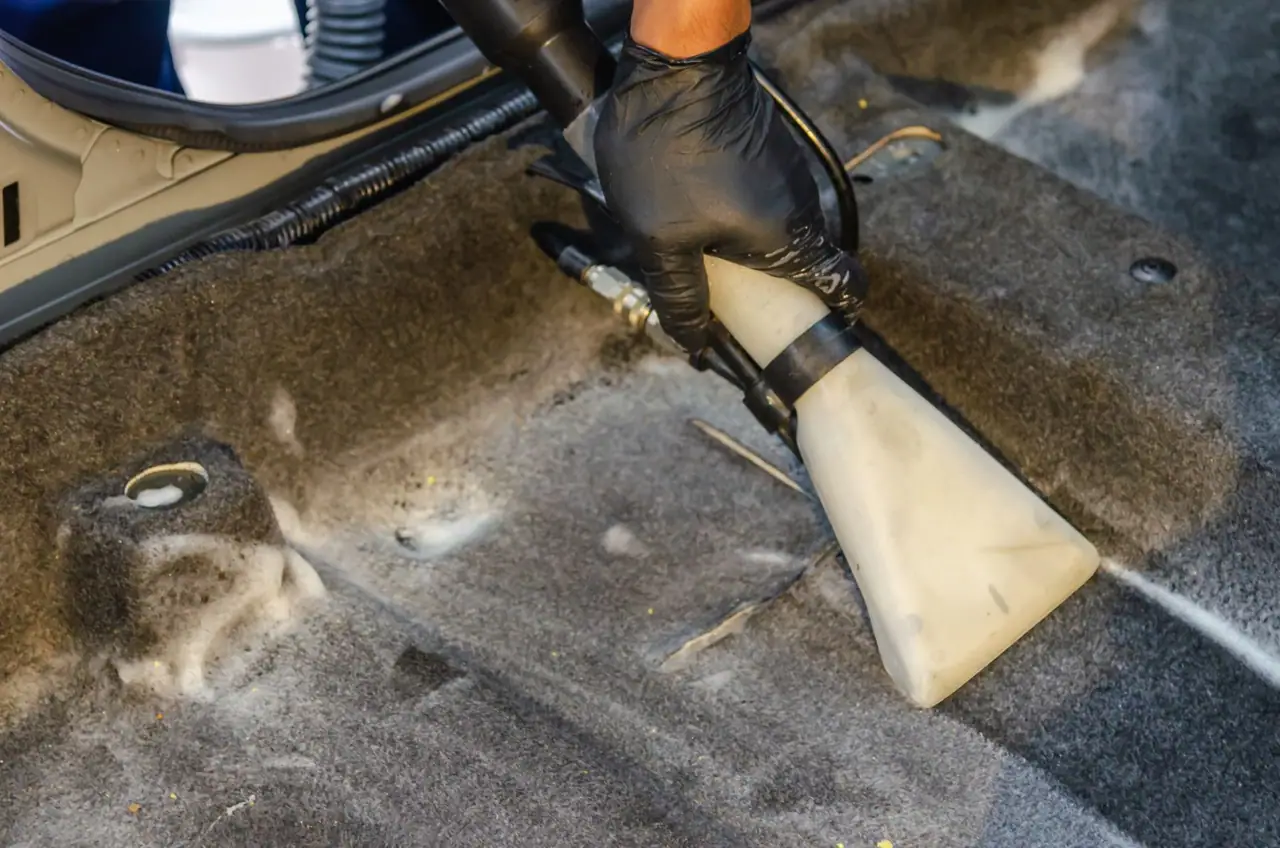
Deep cleaning is the second job. A pre-conditioning agent is applied and left to dwell so it can break the bond, the pile is agitated so the solution reaches the base, and then hot water and vacuum flush the released soil out of the carpet and into the truck.
Why does the carpet manufacturer get to define it?
Because they wrote the warranty, and the warranty has conditions attached.
Read the care documents from the two largest residential carpet makers and the same requirement appears in both. Mohawk requires hot water extraction every 18 months. Shaw's carpet care page recommends professional cleaning "anywhere from 6-18 months, depending on traffic," and names hot water extraction as the method.
| Manufacturer | Interval published | Method named | Equipment condition |
|---|---|---|---|
| Mohawk | Every 18 months, stated as a requirement | Hot water extraction | Must carry the CRI Seal of Approval |
| Shaw | 6 to 18 months, depending on traffic | Hot water extraction (steam cleaning) | Not specified on the care page |
The equipment condition is the part almost nobody checks. The Carpet and Rug Institute Seal of Approval program tests deep-cleaning extractors in an independent laboratory on three measures: how much soil they remove, how much water they leave behind, and whether they preserve the carpet's texture. Machines are rated Bronze, Silver, Gold, or Platinum. It is the only scientific rating the carpet industry has for cleaning equipment, and a machine either has it or it does not.
If you are trying to keep a manufacturer warranty valid, ask any company you call two questions: does the equipment carry the CRI Seal of Approval, and will the invoice state the method used. Our carpet cleaning service answers yes to both, and the method is printed on the invoice so you have the documentation if you ever need to make a claim.
How does hot water extraction reach the bottom of the pile?
The mechanism is worth understanding, because it explains why the cheap version does not work.
Heat and dwell time do the chemistry
A pH-matched pre-spray goes down first and is left to sit. Dwell time is the step budget operators skip, and skipping it is why some jobs take 40 minutes and produce nothing. The solution needs several minutes to emulsify oils and loosen the soil's grip on the fibre.
Agitation carries it to the base
A counter-rotating brush works the solution down through the pile. Without agitation the pre-spray sits on top and cleans the top third, which is the part that was never the problem.
Vacuum lift does the removal
This is where equipment class decides the outcome. A truck-mounted unit keeps the pump and vacuum in the van and runs water at roughly 210°F through a hose. The vacuum recovers the water on the return stroke along with everything suspended in it. A portable machine has a fraction of that lift, so a larger share of what goes in stays in.
An acid rinse stops it happening again
Alkaline pre-sprays clean well and then need neutralising. If they are left in the fibre they stay tacky and attract soil, and the carpet re-soils within weeks. A final acid rinse pass takes the pre-spray out with the dirt. This one step is the difference between carpet that stays clean for eight months and carpet that looks tired by October.

What will a deep clean not fix?
Being honest about this is what separates a technician from a sales call.
Dye stains do not come out. If a spill changed the colour of the fibre rather than coating it, cleaning removes the residue and leaves the colour change. Red drinks, some pet accidents left to dry, and household bleach all do this.
Worn fibre does not come back. Traffic lanes that look dull in every light are usually not dirty. The fibre tips have been abraded by grit, which scatters light differently. Cleaning removes the soil and the dullness stays.
Delamination is a repair, not a cleaning job. If the backing has separated and the carpet ripples underfoot, extraction will not help and can make it more obvious.
Contaminated padding needs replacing. Pet urine soaks through the backing into the pad and sometimes the subfloor. Sub-surface injection and extraction handle moderate cases. Long-standing saturation means cutting out and replacing that section of pad, and we will say so at the walkthrough.
If your problem is one of these four, cleaning is the wrong purchase. That is a better outcome for you than a clean that disappoints.
How is this different from a rental machine?
Two differences, and the second one matters more than people expect.
The first is vacuum lift. Rental units are built to be carried, so the vacuum motor is small. More of the water you put down stays down. In a house sealed to modern energy code, in a region with 156 wet days a year, a carpet that stays damp for two days is a genuine problem rather than an inconvenience.
Residue is the second difference. Consumer carpet detergents are formulated to foam and clean, not to be rinsed out by a machine with weak recovery. What stays behind is sticky, and sticky attracts soil. Callers who cleaned their own carpet six weeks earlier describe the same thing every time: it looks worse now than before they started. Nothing about the room changed. There is simply a soil magnet in the pile that was not there before.
Mohawk's care guide also warns against cleaners with "a pH of 10 or higher" and advises testing any product "on a small, non-visible area for any discoloration of the pile" before using it. Neither instruction appears on the front of a supermarket carpet shampoo bottle.
How often does carpet actually need this?
Take the numbers from the people who made the carpet rather than from anyone selling the cleaning.
- Average household, no pets: every 12 to 18 months
- Pets, children, or allergy sufferers: every 6 to 9 months
- Rental turnover: between every tenancy
- Within a few blocks of Puget Sound: every 8 to 10 months, because beach sand is angular and cuts fibre faster than inland grit
The interval is not really about how dirty the carpet looks. It is about removing abrasive material before it does mechanical damage, which is exactly why manufacturers tie warranty coverage to it. By the time a carpet looks like it needs cleaning, the grit has been grinding for months.
We cover why the interval shifts by city, and what your specific warranty is likely to demand, in how often you should clean your carpet.
What does it cost, and how long does it take?
For a standard Seattle home, a deep clean runs from $39 per room, with whole-home packages bringing the per-room rate down. A three-bedroom house takes 60 to 120 minutes on site and dries in 4 to 8 hours.
Drying is the part that varies most locally. Seattle records 156.2 days a year with measurable precipitation according to the NOAA 1991 to 2020 climate normals for Seattle-Tacoma airport, and the damp season runs October through May. That is why our crews carry air movers as standard on valley-floor jobs rather than as an upsell. A full breakdown sits in what carpet cleaning costs in Seattle, and the drying maths is in how long carpet takes to dry here.
What to ask before you book
Five questions, each with a checkable answer:
- Is the equipment truck-mounted or portable? Both can work. Only one of them has the vacuum lift to get a carpet dry in a Northwest winter.
- Does the equipment carry the CRI Seal of Approval? Mohawk requires it. If you have a Mohawk carpet under warranty, this is not optional.
- Do you neutralise the pre-spray? If the answer is vague, expect rapid re-soiling.
- Will you identify the fibre before choosing chemistry? Wool and nylon need different products. A high-pH pre-spray on wool causes permanent yellowing.
- Will the invoice state the method? You need this if you ever make a warranty claim.
Any competent company answers all five without hesitating. We go through how to weigh the answers in choosing a carpet cleaning company in Seattle.
Get a flat price for your floors
You now know what deep cleaning is supposed to do, what it cannot do, and the two intervals the manufacturers actually publish. The first step is small: find your carpet's warranty document and check what interval it names, because that number decides how often you need this and whether your current cleaner qualifies.
If you would rather have someone tell you what your carpet needs, call (877) 514-6828. We quote a flat price for carpet cleaning across Seattle and the surrounding King County cities before any equipment comes off the truck, and we will tell you honestly when cleaning is not the answer.
About this article
Written by Seattle Carpet Cleaning Services, iicrc-certified technical team, and reviewed against the primary sources linked throughout. Published August 10, 2026. If you spot something that has changed, tell us at [email protected] and we will correct it.
Answers before you book
Frequently asked questions
The questions readers send us most often on this topic.
What is the difference between deep carpet cleaning and regular carpet cleaning?
Does deep carpet cleaning actually get the carpet dry, or does it leave it soaked?
Can I deep clean my carpet myself with a rental machine?
How often does carpet need a deep clean?
Will deep cleaning remove old stains that have been there for years?
Does deep cleaning damage carpet or shorten its life?
Is deep carpet cleaning worth it before selling a house?
- Licensed & InsuredWA state licensed and fully bonded
- 100% Satisfaction GuaranteeWe re-clean free or you don't pay
- IICRC-Certified TechniciansTrained to industry standard S100
- Pet & Kid Safe SolutionsGreen-Seal certified, low-residue
- Same-Week AppointmentsMost King County jobs within 72 hours
- Upfront Flat PricingQuoted before we unroll a hose
Certified & Accredited
- IICRC
- BBB A+
- CRI
- Chamber
- L&I
Keep reading
Methods
Hot Water Extraction vs Steam Cleaning vs Shampooing
Steam cleaning and hot water extraction are two names for one method. Shampooing is not. What each does, and which one your warranty names.
Maintenance
How Often Should You Clean Carpet? Check Your Warranty First
Carpet makers publish a required cleaning interval and method, and missing it can void your warranty. Mohawk says 18 months. Shaw says 6 to 18.
Local
How Long Does Carpet Take to Dry in Seattle?
Four to eight hours for a properly run job. Seattle gets 156 wet days a year and the EPA wants damp material dry inside 24 hours.


Get a flat quote for your home
Same-week appointments across King County. Call (877) 514-6828 or send the form.
Licensed & insuredMon–Fri 7am–7pm · Sat 8am–5pm · Sun 9am–4pmRe-clean guarantee