Stains
Carpet Stain Removal: What Comes Out and What Never Will
Some spills coat the fibre and lift out. Some dye it and are permanent. Knowing which you have in the first ten minutes matters more than any product.

Whether a carpet stain comes out depends on one thing more than any product: did the spill coat the fibre or dye it. A coating can be flushed away. A dye change is a new colour in the fibre, and no cleaner reverses it. The second thing that decides it is what you did in the first ten minutes, because rubbing a fresh spill drives it past the fibre surface where topical treatment can no longer reach.
That is the entire framework. Everything below is how to tell which one you have, what to do in the first few minutes, and where the honest limits sit.
Which stains actually come out?
Sort by what the spill does to the fibre rather than by what it was.
| Category | Examples | Comes out? | What it needs |
|---|---|---|---|
| Water-soluble | Coffee without cream, soft drinks, juice, mud once dry | Usually, fully | Cool water and blotting, then extraction |
| Protein | Milk, egg, blood, vomit, food residue | Usually, if not heated | Cool water only. Heat sets these permanently |
| Oil and grease | Butter, cosmetics, tracked-in asphalt, hair product | Usually | Solvent-side pre-spray, then extraction |
| Tannin | Tea, red wine, some fruit juice | Often, rarely perfectly | Acid-side treatment, sometimes repeated |
| Dye transfer | Red drink mixes, iodine, some pet accidents | Sometimes, with reducing agents | Professional treatment, never guaranteed |
| Bleach and dye strip | Household bleach, acne creams, some toilet cleaners | No. The colour is gone | Repair by re-dyeing or patching |
| Abrasion and fading | Traffic lanes, sunlit areas near glass | No. Not a stain | Nothing. This is wear, not soil |
The last two rows account for a large share of the spots people call about, and the reason is understandable: a bleach mark and a spill mark look similar. They are opposite problems. One added colour, the other removed it.
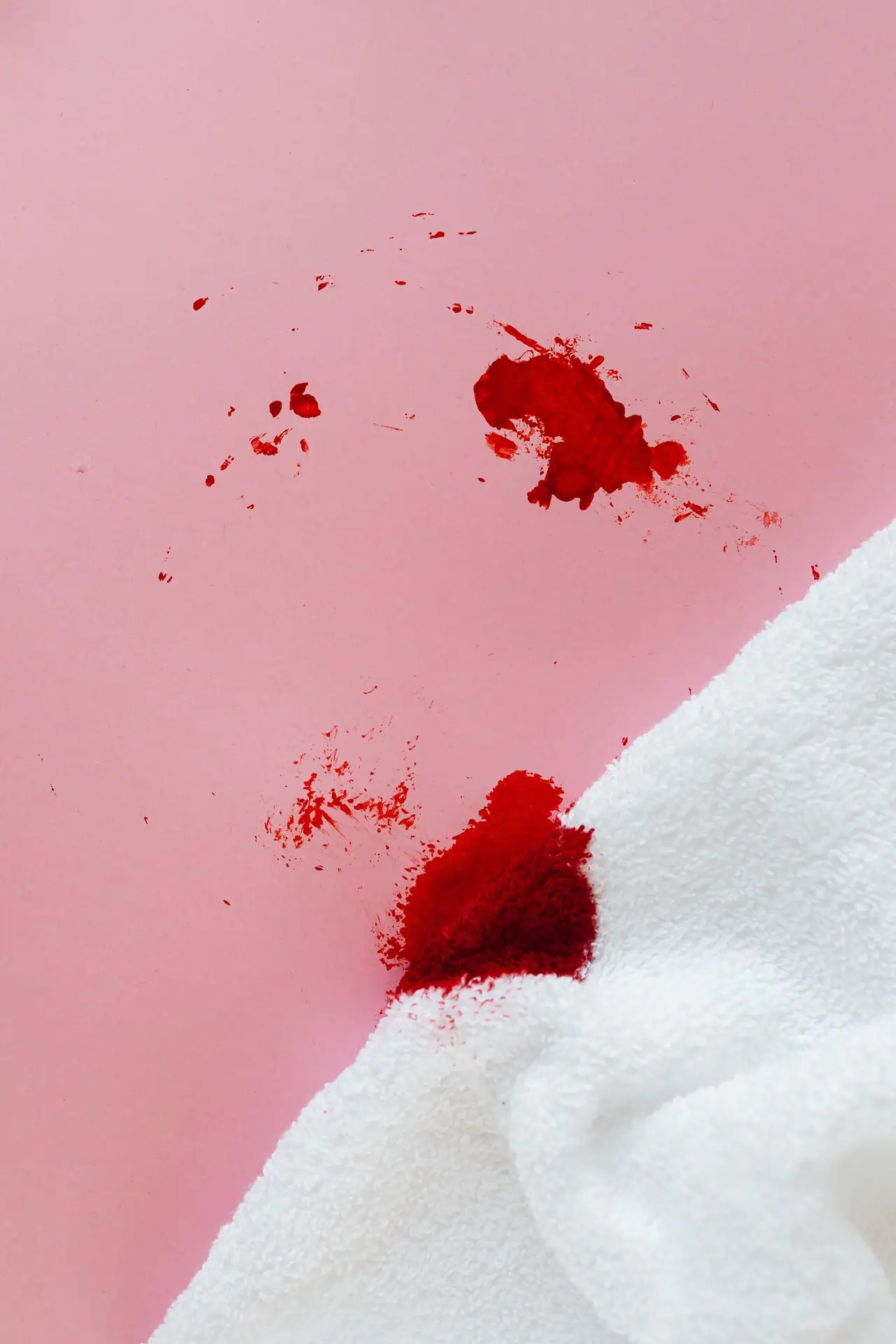
What should you do in the first ten minutes?
Five steps, in order. Doing them badly is worse than doing nothing.
Lift the solids first
Scoop, do not scrub. A spoon and a plastic card work better than a cloth for anything with body to it. Pushing solids into the pile turns a surface problem into a base-of-pile problem.
Blot from the outside inward
Press a clean white cloth into the spill, hold, lift, move to a dry section of cloth, repeat. Work the perimeter toward the centre so you do not spread the edge outward. White cloth matters, because a coloured towel can transfer its own dye into damp carpet.
Use cool water, not hot
Heat sets protein spills permanently. Milk, egg, and blood are the common ones, and they are exactly the spills people instinctively attack with hot water.
Do not rub
This is the one that decides the outcome. Rubbing pushes material below the fibre surface and distorts the pile, so even after the colour is dealt with the spot remains visible as a texture change. It is also how a small spill becomes a large one.
Weight a dry towel over it
Fold a clean towel, lay it over the damp area, and put something heavy on top for an hour. Capillary action pulls remaining moisture and residual material up into the towel. This step is unglamorous and it removes more than most spot cleaners do.
One exception to all five steps: if the spill landed on a loose rug rather than fixed carpet, check the fibre before you reach for water. Viscose, sold as art silk or bamboo silk, watermarks permanently on contact with plain water, so the standard response makes it worse. Area rug cleaning in Seattle covers how to identify it in about a minute.
The product matters less than the first ten minutes. A spill that is blotted stays on the fibre surface where extraction can flush it. A spill that is rubbed goes below that surface, and from there the outcome is decided by chemistry rather than by mechanics. Method: field observation across residential jobs, cross-checked against the spot-treatment guidance in the Mohawk carpet care guide, 10 August 2026.
What should you never put on carpet?
Four things, each of which turns a removable problem into a permanent one.
Bleach, in any dilution. It strips dye. The result is a pale patch that is more visible than the original spill and can only be fixed by re-dyeing or patching.
Anything strongly alkaline. Mohawk's care guide warns against cleaners with "a pH of 10 or higher" and instructs testing any product "on a small, non-visible area for any discoloration of the pile" first. Several popular household degreasers sit above that line. On wool the damage is faster and worse.
Heat on protein spills. Steam or hot water on milk, egg, or blood coagulates the protein into the fibre.
A stiff brush. It cuts fibre tips. The stain may go and a fuzzy, light-scattering patch stays behind for the life of the carpet.
If a spill is large, dye-based, or on wool, the useful move is to blot it, stop, and call rather than to work through the cupboard. We hold same-day slots across King County for exactly this, because on dye-based spills the difference between two hours and two days is the difference between removable and permanent. Call (877) 514-6828 or see our carpet cleaning service.
Why do stains come back after they were gone?
Two mechanisms, and they need opposite fixes.
Wicking
The spill soaked through to the backing. Surface cleaning removed what was in the pile, and as the carpet dried, the remainder travelled back up the fibre by capillary action. The spot looks perfect that evening and is visible again the next morning.
The fix is re-extraction of the affected area, sometimes with a weighted absorbent pad left in place while it dries. Wicking is a drying problem as much as a cleaning one, which is why it is more common here than in dry climates. Seattle-Tacoma airport records 156.2 days a year with measurable precipitation in the NOAA 1991 to 2020 climate normals, and slower drying gives wicking more time to happen.
Speed matters for a second reason. The EPA advises that wet or damp material be dried within 24 to 48 hours, because mould generally will not grow inside that window, and it specifically warns that moisture trapped below carpet can release spores into indoor air. A large spill left to dry on its own in a closed room in January is a moisture event, not just a stain.
Residue
A spot cleaner was applied and never fully rinsed. What is left is tacky, so it collects soil from every footstep, and within weeks there is a dark halo where a clean patch used to be. The fix is rinsing rather than cleaning again, which is why telling the technician what you already applied changes what they do.
What about pet accidents?
Different problem, different urgency, and the reason it needs its own treatment is chemistry rather than smell.
Urine is mildly acidic when fresh and turns alkaline as it dries. That shift is what attacks the dye, so a small accident dealt with in an hour usually leaves nothing, while the same accident found a week later can leave a permanent yellow or orange mark. It also passes through the backing into the pad and sometimes the subfloor, which is why surface cleaning removes the visible mark and the smell returns on the first humid day.
Handled properly, that means locating deposits with a UV lamp, injecting an enzyme product below the surface where the uric acid crystals actually sit, and extracting. Heavy or long-standing contamination sometimes needs the pad cut out and replaced in that section. We tell you which of those you have at the walkthrough, because they are very different prices and one of them is not a cleaning job at all.
When is it wear rather than a stain?
Three signs that what you are looking at will not respond to cleaning:
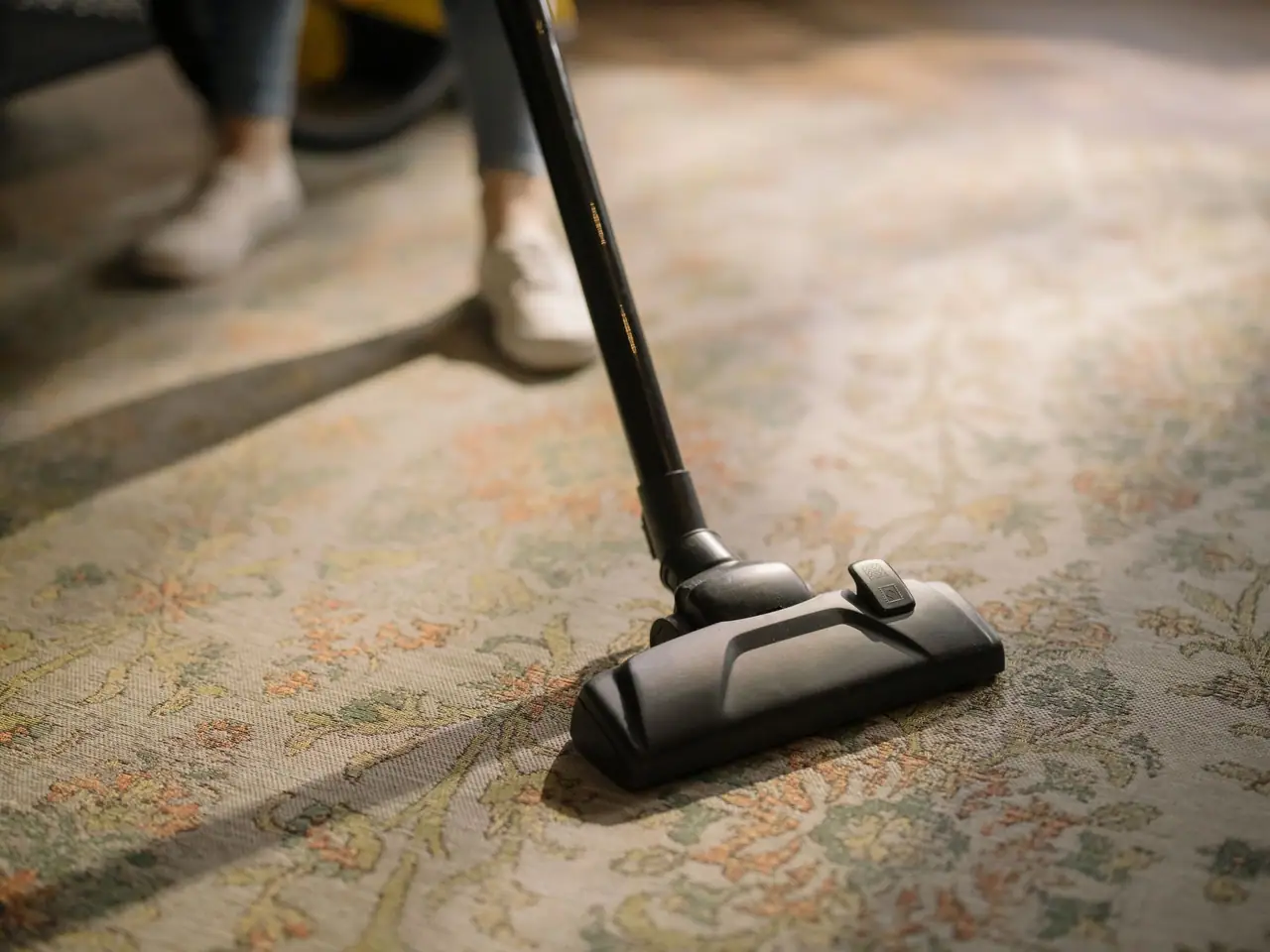
- It follows the walking path. Traffic lanes down a hallway or in front of a sofa are usually abraded fibre, not soil. Grit has scuffed the fibre tips so they scatter light differently.
- It is worst near windows. Sun fading is gradual, follows the light, and often shows a sharp line where furniture stood.
- It looks the same wet and dry. Soil darkens when wet. Wear does not change.
This distinction is also written into the trade standard. ANSI/IICRC S100, the national standard for cleaning textile floor coverings, is built around soil removal, residue, and appearance retention, and appearance loss caused by abrasion sits outside what any cleaning process is expected to reverse.
We say this at the walkthrough rather than after payment, because selling a cleaning for a wear problem is how a company gets one job and no referrals. The related question, how often to clean so that grit never gets the chance to do this, is covered in how often you should clean your carpet.
Deal with the spill you have now
You can now tell a coating from a dye change, you know the five first-response steps, and you know the four things that turn a fixable spill into a permanent one. The first step takes thirty seconds: put a white cloth and a plastic scraper somewhere you can reach them from the living room, because response time is the variable you actually control.
For anything large, dye-based, on wool, or from a pet, call (877) 514-6828 the same day. We hold slots for it. See coverage for carpet cleaning in Seattle and the surrounding cities, or read what deep cleaning does if the whole floor needs attention rather than one spot.
About this article
Written by Seattle Carpet Cleaning Services, iicrc-certified technical team, and reviewed against the primary sources linked throughout. Published August 5, 2026. If you spot something that has changed, tell us at [email protected] and we will correct it.
Answers before you book
Frequently asked questions
The questions readers send us most often on this topic.
What carpet stains are permanent?
Should I rub a carpet stain or blot it?
Does club soda actually work on carpet stains?
Why do carpet stains come back after cleaning?
What should I never put on a carpet stain?
How long do I have to deal with a spill before it sets?
Can a professional remove a stain I already tried to clean?
- Licensed & InsuredWA state licensed and fully bonded
- 100% Satisfaction GuaranteeWe re-clean free or you don't pay
- IICRC-Certified TechniciansTrained to industry standard S100
- Pet & Kid Safe SolutionsGreen-Seal certified, low-residue
- Same-Week AppointmentsMost King County jobs within 72 hours
- Upfront Flat PricingQuoted before we unroll a hose
Certified & Accredited
- IICRC
- BBB A+
- CRI
- Chamber
- L&I
Keep reading
Methods
Deep Carpet Cleaning: What It Actually Means
Deep cleaning removes soil from the base of the pile, not the surface. Carpet makers put that in writing, and it names one method.
Local
How Long Does Carpet Take to Dry in Seattle?
Four to eight hours for a properly run job. Seattle gets 156 wet days a year and the EPA wants damp material dry inside 24 hours.

Rugs
Area Rug Cleaning in Seattle: What to Check Before Anyone Touches It
Rugs are not carpet. Fibre, dye stability, and backing decide whether a rug can be cleaned in your living room or has to leave the house. Here is how to tell.


Get a flat quote for your home
Same-week appointments across King County. Call (877) 514-6828 or send the form.
Licensed & insuredMon–Fri 7am–7pm · Sat 8am–5pm · Sun 9am–4pmRe-clean guarantee