Commercial
Commercial Carpet Cleaning in Seattle: Building an Interval That Works
Commercial carpet fails at the entry and along the main path, not evenly. Zone the building by traffic and stop paying to restore what you could maintain.

Commercial carpet does not wear out evenly. It fails in the first four metres inside the door and along the main walking path, while the carpet under the conference table stays close to new for years. That single fact should decide your entire maintenance programme, and in most buildings it does not, because the floor gets cleaned as one thing on one interval.
Zoning a building by traffic is the change that saves money. It puts frequent, cheap, low-moisture attention where the soil actually arrives, and reserves full hot water extraction for the intervals and areas that need it.
Why does commercial carpet fail in specific places?
Because soil enters at a small number of points and is deposited in a predictable pattern.
Most of it walks in through the door
Tracked-in grit is deposited in the first several steps inside an entrance. That is why the carpet by reception looks tired while the same carpet twenty metres away looks fine. Entry matting extends the deposition zone and is the cheapest floor-care investment in any building.
Traffic concentrates into narrow paths
People walk the same line between the door, the lift, and their desk. Those lanes take many times the footfall of the surrounding floor, and the damage is mechanical: grit ground against fibre by every step.
Commercial carpet is built to hide this, not to resist it
Low-pile loop and carpet tile are specified in mid tones and patterns because they conceal soil well. Concealment is not removal. By the time a commercial floor looks obviously dirty, the abrasive layer has been working for a long time.
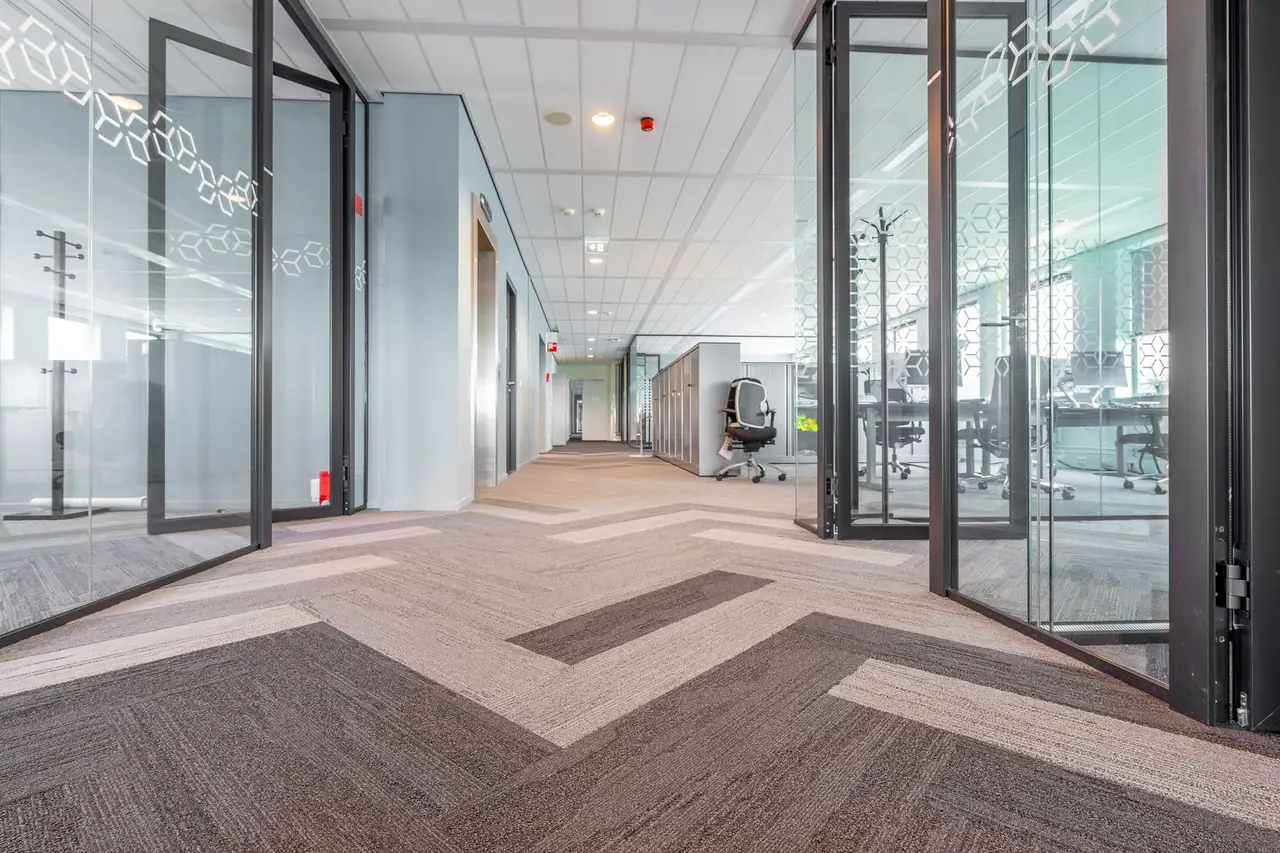
How should you set the interval?
Zone the building, then set an interval per zone.
| Zone | Examples | Interval | Method |
|---|---|---|---|
| Entry and first 4 metres | Lobby, reception, vestibule | Monthly to quarterly | Low moisture, plus extraction twice a year |
| Primary circulation | Main corridors, lift lobbies, path to the kitchen | Quarterly | Low moisture, plus extraction annually |
| General floor | Open plan desks, meeting rooms | Every 6 to 12 months | Hot water extraction |
| Low traffic | Private offices, storage, boardrooms | Every 12 to 18 months | Hot water extraction |
| Food adjacent | Kitchens, break-out areas, canteens | Quarterly | Extraction, solvent-side pre-spray for grease |
This is legitimate rather than a compromise, and the reason sits in the standard. ANSI/IICRC S100, the American National Standard for cleaning textile floor coverings, is written around performance outcomes rather than mandating a single method. A technician can use hot water extraction, low-moisture encapsulation, or bonnet cleaning provided the outcome meets the standard for soil removal, residue, and drying. That is what allows a mixed programme to be a professional programme rather than a corner cut.
The standard is written around outcomes, not one method. ANSI/IICRC S100 defines what a cleaned textile floor covering has to achieve for soil removal, residue, and drying, rather than prescribing a single process. That is why frequent low-moisture maintenance in traffic zones plus periodic full extraction is a defensible programme. Method: read the ANSI/IICRC S100 scope and the CRI Seal of Approval specification, 10 August 2026.
What method suits an occupied building?
The constraint is almost always drying time rather than cleaning power.
Low moisture where the building cannot close
Encapsulation applies a polymer solution that crystallises around soil as it dries and is then vacuumed out. Carpet is walkable in roughly an hour, which is what makes it workable in a lobby that never closes or an office opening at seven. It cleans the pile, not the backing.
Hot water extraction where you have a window
Extraction is the restorative pass, and it needs a drying window. That is straightforward overnight and difficult mid-week during business hours, particularly here. Seattle-Tacoma airport records 156.2 days a year with measurable precipitation in the NOAA 1991 to 2020 climate normals, and the EPA advises drying damp material within 24 to 48 hours to limit mould risk. In a sealed commercial building in January, that means planned airflow rather than assumption.
Carpet tile needs metered moisture
Tiles are laid on a slab with pressure-sensitive adhesive. Flooding them lifts edges and breaks the bond, and there is no airflow underneath to help. Both low-moisture cleaning and carefully metered extraction work. Treating a glued tile floor like broadloom does not.
If your building is cleaned reactively, when someone notices it looks bad, you are paying restoration prices for maintenance work. We will walk the floor, zone it by traffic, and quote an interval programme with a fixed monthly or quarterly figure so it can go in a budget rather than appearing as a surprise. Call (877) 514-6828 or see our commercial and residential cleaning services.
What does a workable programme look like?
A four-part structure that most buildings can adopt without changing anything else.
- Fix the entry first. Proper walk-off matting inside and outside the main door, long enough for several steps, cleaned on its own schedule. This removes soil before it becomes your carpet's problem and it is cheaper than anything else on this list.
- Vacuum daily in traffic zones, weekly elsewhere. The EPA's indoor air guidance pairs regular vacuuming with periodic wet extraction as the two halves of carpet maintenance. Daily vacuuming in the zones that matter does more than an extra annual extraction.
- Interval clean by zone. Per the table above, scheduled rather than requested.
- Document it. Itemised invoices naming areas and methods, kept in the facilities file. Manufacturers require documented professional cleaning to keep commercial warranty coverage intact, and the same record makes the budget case for the programme year over year.
What does scheduling look like in practice?
Three things worth agreeing before the first visit.
Access and timing. After close or before opening for extraction work. Loading dock access, lift bookings, and out-of-hours security arrangements are usually the constraint rather than the cleaning itself, particularly in downtown Seattle and Bellevue towers.
Notification. Signage for wet areas, and a note to occupants for anyone with fragrance sensitivity. There is a fragrance-free, low-VOC line and it needs to be on the vehicle before the crew leaves.
A named contact. Programmes fail when the person who agreed the interval leaves and nobody owns the schedule. Put the interval in the facilities calendar, not in an email thread.

Where do we work?
Commercial work is roughly half our volume in Tukwila, where the Southcenter retail core and the Interurban corridor concentrate offices, retail units, clinics, and hospitality in a small area. We also run regular commercial routes through downtown Seattle, Bellevue, Kent Valley, and the SeaTac hotel corridor, where turnover speed rather than interval maintenance is usually the priority.
Sector by sector the pattern varies. Medical and dental practices need scheduling around clinic hours and documented methods. Restaurants need solvent-side pre-spray for airborne grease. Hotels near the airport need same-day turnover. Coverage detail by city is on our areas we serve page, and the domestic equivalent of this article is how often you should clean your carpet.
Get your building zoned and quoted
You now have the reason commercial carpet fails unevenly, an interval table you can apply to your own floor plan, and the standard that makes a mixed method programme defensible. The first step takes fifteen minutes and no budget: walk your main entrance and count how many paces in the visible soiling extends. That distance tells you how much matting you are missing.
Call (877) 514-6828 to have the floor walked and zoned. We quote interval programmes as a fixed recurring figure so they can be budgeted, and every visit is documented for your facilities file. See carpet cleaning in Seattle, Tukwila, and Bellevue.
About this article
Written by Seattle Carpet Cleaning Services, iicrc-certified technical team, and reviewed against the primary sources linked throughout. Published August 2, 2026. If you spot something that has changed, tell us at [email protected] and we will correct it.
Answers before you book
Frequently asked questions
The questions readers send us most often on this topic.
How often should commercial carpet be cleaned?
Can commercial carpet be cleaned outside business hours?
What is the difference between commercial and residential carpet cleaning?
Is low-moisture or encapsulation cleaning good enough for an office?
How do you clean carpet tiles without damaging the adhesive?
Do you clean common areas and lobbies in occupied buildings?
Can you provide documentation for facilities records?
- Licensed & InsuredWA state licensed and fully bonded
- 100% Satisfaction GuaranteeWe re-clean free or you don't pay
- IICRC-Certified TechniciansTrained to industry standard S100
- Pet & Kid Safe SolutionsGreen-Seal certified, low-residue
- Same-Week AppointmentsMost King County jobs within 72 hours
- Upfront Flat PricingQuoted before we unroll a hose
Certified & Accredited
- IICRC
- BBB A+
- CRI
- Chamber
- L&I
Keep reading
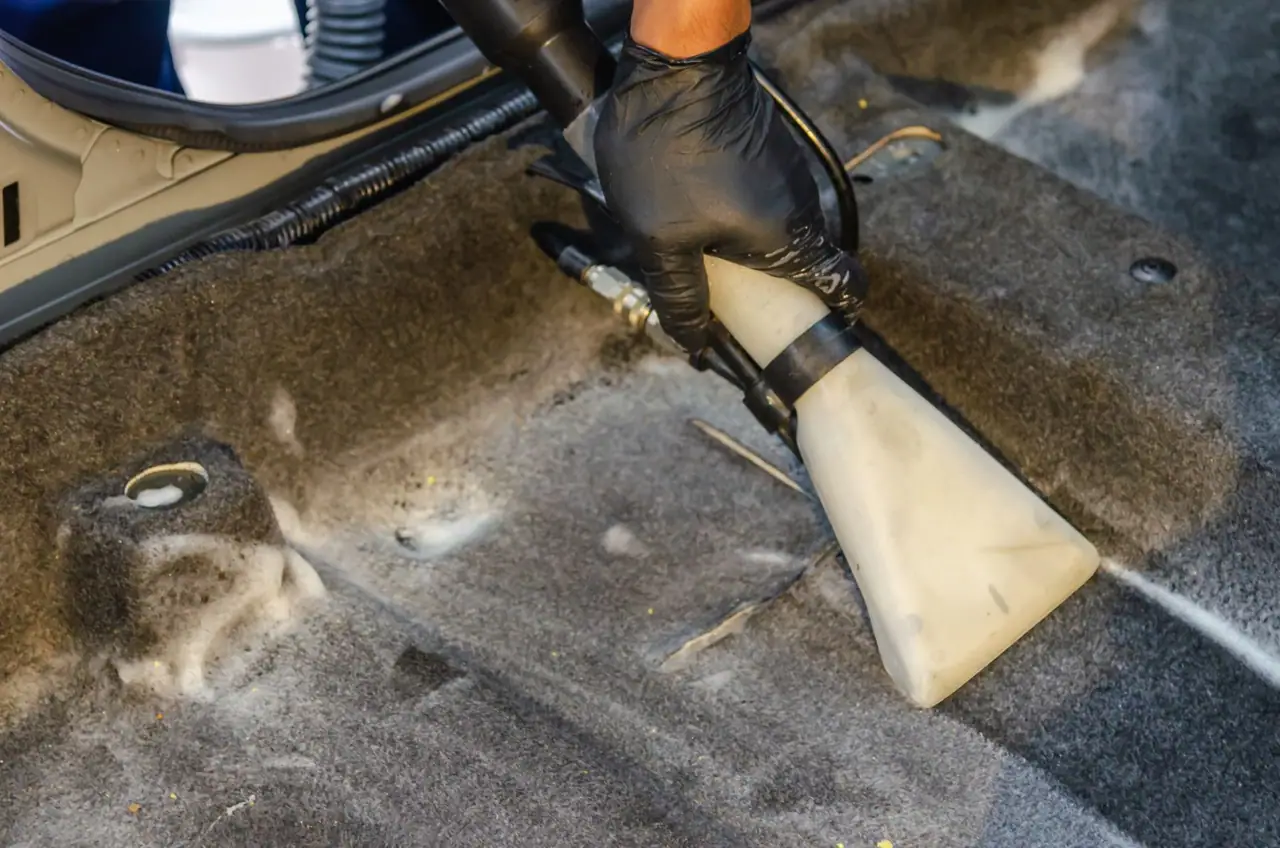
Methods
Hot Water Extraction vs Steam Cleaning vs Shampooing
Steam cleaning and hot water extraction are two names for one method. Shampooing is not. What each does, and which one your warranty names.
Maintenance
How Often Should You Clean Carpet? Check Your Warranty First
Carpet makers publish a required cleaning interval and method, and missing it can void your warranty. Mohawk says 18 months. Shaw says 6 to 18.
Pricing
What Carpet Cleaning Costs in Seattle (And Why Quotes Vary So Much)
Real per-room and per-square-foot prices for Seattle carpet cleaning, what changes them, and why the top results disagree by a factor of four.


Get a flat quote for your home
Same-week appointments across King County. Call (877) 514-6828 or send the form.
Licensed & insuredMon–Fri 7am–7pm · Sat 8am–5pm · Sun 9am–4pmRe-clean guarantee